Roots for Resilience
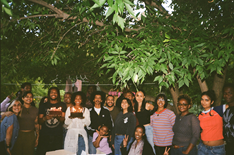
Roots for Resilience is an urban agriculture initiative launched by BEI in 2024. Based at the Maloca Community Garden at York University, the initiative brings together Black and Brown youth, children, and families through weekly educational workshops, shared meals, and opportunities to build community. Roots for Resilience creates space for people to reconnect with land and food, strengthen wellbeing, and experience the physical and emotional benefits of spending time in nature.
Fund the Campaign
Our success is thanks to the dedication, hard work, and financial support of people just like you. Donate to help fund the We Remember Being Earth campaign
Connection to Nature
Why is improving connection to nature central to Environmental Justice?
Across much of the Western world, Black communities are highly urbanized. As a result, many of us have been disconnected from direct contact with the natural world. Yet across our ancient cultures, all living beings, trees, animals, land, and water, were understood as sacred. Our traditional philosophies did not place humans above nature, but within it. We were never meant to be its dominators; we are part of it. We are one with the Earth.
We Remember Being Earth is an invitation to return to that knowing. It reminds us that we are inseparable from the planet and from one another. If the Earth is harmed, we are harmed. If it is cared for, we are restored. This campaign calls for a renewed relationship with the natural world, one rooted in care, reciprocity, and belonging, where we nurture the environment and are, in turn, nurtured by it.
This is a message carried forward from our ancestors. And it is a message we share openly with all people and communities who recognize that we are Earth, and that our futures are deeply intertwined
Earth is not something we manage from the outside, but something we belong to.
What is BEI doing about this?
In 2024, BEI launched Roots for Resilience, an urban agriculture initiative. Through this initiative, we seek to reconnect Black communities with land and nature through shared learning, care, and collective presence.
Now in its third year, Roots for Resilience has grown into a meaningful third space for many Black youth and their allies, a place where participants can spend time in nature, develop practical skills for healthy living, and build meaningful relationships with one another and the land.
As the initiative continues to grow, we are exploring opportunities to deepen its impact on mental health and wellness while strengthening its connections to BEI’s broader strategic priorities.
Watch a short film highlighting the 2025 season of Roots for Resilience below.
In 2024, BEI piloted a new initiative to expand access to transformative nature experiences for communities that are often excluded from environmental spaces. We supported six Black environmental leaders to travel to Greenland on a 14-day expedition to witness the visible impacts of climate change and bring those stories back to their communities.
The experience was powerful—and complicated.
After returning home, participants shared that alongside moments of awe and learning, they also encountered difficult experiences, including racism and challenges related to cultural safety. As an organization, we listened carefully.
We made the decision to pause the initiative until we have the resources and structure to provide a fully supported, culturally grounded experience for participants from departure to return.
This pilot reminded us that access alone is not equity. Environmental programming must also ensure belonging, safety, and dignity. Without addressing the broader realities of racism in society, even well-intentioned climate initiatives can fall short.
Expanding Access to Transformative Nature Experiences
In 2024, BEI also piloted an initiative designed to expand access to transformative nature-based experiences for communities that have historically been excluded from environmental spaces.
Through a corporate partnership, we secured a 14-day Arctic expedition to Greenland and supported six Black environmental leaders to participate. The experience offered participants an opportunity to witness the visible impacts of climate change firsthand, connect with the Arctic landscape, and bring those experiences and stories back to their communities.
The experience was powerful, and complicated.
After returning home, participants shared that, alongside moments of awe, connection, and learning, they also encountered difficult experiences, including racism and challenges related to cultural awareness and safety. As an organization, we listened carefully to their experiences and reflected on what we needed to do differently.
We made the decision to pause the initiative until we have the resources, partnerships, and organizational structures necessary to provide a fully supported and culturally grounded experience for participants from departure to return.
This pilot reinforced an important lesson for BEI: access alone is not equity. Equity-focused programming must also create conditions for belonging, safety, cultural awareness, and dignity. Without addressing the broader realities of racism and sexism in society, even well-intentioned initiatives can fall short of their goals.
The experience also led BEI to strengthen our approach to organizational risk management. We have integrated risk assessment into the planning of all our initiatives and programs. For each initiative, we develop and maintain a risk register to identify potential challenges, assess their potential impact, and establish appropriate mitigation strategies.
This is part of our ongoing commitment to learning, accountability, and continuous improvement.
Below is a video capturing moments from the Arctic expedition pilot project.