Fund the Campaign
Our success is thanks to the dedication, hard work, and financial support of people just like you. Donate to help fund this campaign as we push for clean air in our environment.
Healing the Land, Healing Ourselves
What does “Healing the Land, Healing Ourselves” mean?
Across many ancestral knowledge systems, people understood something very important: the health of the land and the health of the people are one and the same. When the air is clean, when the soil is alive, when water flows without poison, people are healthier. When the land suffers, we suffer too.
Today, we use the term environmental racism to describe a painful truth. Because of colonial history and ongoing racism, society has accepted that some communities carry more pollution than others. Low-income communities , often Black, Indigenous, and other racialized communities, are more likely to live near factories, highways, toxic dumps, and contaminated land. Their neighborhoods are treated as sacrifice zones.
In cities, this often shows up in places called brownfields.
Brownfields are old industrial lands where chemicals and pollutants were left behind. Some are slightly contaminated. Others are deeply poisoned. Many of these sites sit unused for years. Corporations once made profit there, then walked away, leaving the damage behind.
These abandoned lands often surround our communities like scars in the earth, land that could have been parks, gardens, or safe gathering spaces, but instead sits fenced off and forgotten.
In our ancestral cultures, land was never just a resource to extract money from. The land is alive. It feeds us, holds us, teaches us. We belong to the land , not the other way around. If the land is harmed, it is our responsibility to help restore it.
That is why BEI works to not only protect the land, but to heal it.
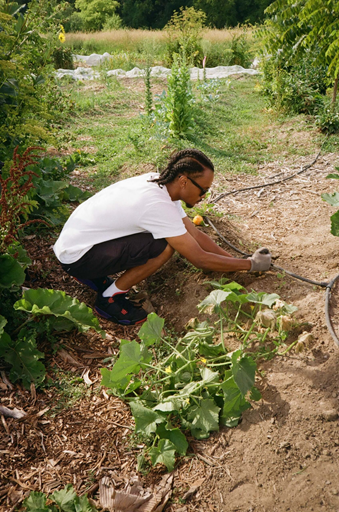
We partner with scientists, volunteers, and institutions to access brownfield sites and support their restoration. One of the methods we use is phytoremediation, a natural process where certain plants help pull toxins out of the soil. Instead of only digging the soil out and moving the problem somewhere else, we work with nature to help the land regenerate itself.
Healing the soil is part of healing our communities.
Because when the land breathes better, so do we.
If contaminated land is restored, it should not simply return to private speculation. It should become a community asset. It should return to the commons
Is it Communities responsibilities to heal the land?
In most cases, communities did not cause the contamination of brownfields.
These lands were polluted by industrial and corporate activities , factories, storage sites, extraction, chemical use. The damage was often done in the name of profit. So it is a fair question to ask:
Is it just to expect communities to heal land they did not poison?
In an ideal world, every corporation that contaminated land would be fully accountable. They would clean it properly, restore it, and ensure no harm remains.
But in reality, corporate timelines are often short. Their responsibility ends when profit ends. Too often, “cleanup” means digging up contaminated soil and moving it somewhere else, displacing the problem rather than truly healing it. The wound is not healed. It is relocated.
Communities approach land differently.
We do not believe communities should carry the burden alone.
But we are willing to participate in healing, if that healing leads to justice.
If contaminated land is restored, it should not simply return to private speculation. It should become a community asset. It should return to the commons. It should serve housing, green space, food growing, culture, children, elders, life.