Bring the Forest Home
What does “Bring the Forest Home” mean?
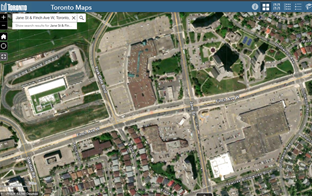
If you look at the neighbourhood in the aerial image above, you’ll notice something striking:
lots of concrete, very few trees.
In many low-income neighbourhoods in the western world, trees are often pushed to the edges. Big parking lots, wide roads, and tall buildings take up most of the space. The few trees that exist are scattered and isolated, instead of forming healthy green areas that can protect people and nature.
This means that not everyone has the same access to trees and that income becomes a predictor of people’s access to nature and its benefits, which has direct impact on people’s health.
Some communities enjoy shaded streets, cooler summers, and clean air. Others have to walk long distances under the sun, breathe hotter air, and live surrounded by pavement that absorbs heat and floods easily when it rains.
“Bring the forest home” is our attempt to mobilize a movement that tries to address these inequities. Instead of accepting the status quo, where some neighbourhoods are not designed to be green and residents must leave their communities to access nature, we invite communities, partners, and stakeholders to work with us to transform these places and bring the forest home.
What are the current initiatives under this campaign?
In 2025, BEI conducted a series of community consultations with Black and Brown residents as part of the City of Toronto’s Parkland Strategy update.
The message was clear: Black and Brown Torontonians deeply value access to green spaces. However, there are still too few Black-led greening initiatives designed with their lived experiences, cultural perspectives, and priorities in mind.
In 2026, with support from the City of Toronto, supplemented by other key funders, we launched the Beyond Provision Grounds initiative to help address this gap.
This initiative seeks to expand access to trees and green spaces while ensuring that the work is shaped by the communities it serves.
Stay tuned for updates as we share lessons, outcomes, and impact from the project.
How does this support community wellbeing?
Access to nature plays a powerful role in physical and mental well-being, yet its importance is often underestimated in social impact work. Green spaces support healthy bodies, emotional grounding, food security, and strong community connections. They also carry memory, reminding communities of older ways of living in balance with the land, and of relationships to nature that have been disrupted but not erased.