Roots for Resilience
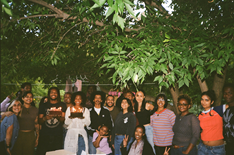
Roots for Resilience is an urban agriculture initiative launched by BEI in 2024. Based at the Maloca Community Garden at York University, the initiative brings together Black and Brown youth, children, and families through weekly educational workshops, shared meals, and opportunities to build community. Roots for Resilience creates space for people to reconnect with land and food, strengthen wellbeing, and experience the physical and emotional benefits of spending time in nature.
Fund the Campaign
Our success is thanks to the dedication, hard work, and financial support of people just like you. Donate to help fund the We Remember Being Earth campaign
Take Action
Nous nous souvenons d'avoir été la Terre
Post your testimonial of what nature represents to you
We Remember Being Earth
What does “We Remember Being Earth” mean?
Across much of the Western world, Black communities are highly urbanized. As a result, many of us have been disconnected from direct contact with the natural world. Yet across our ancient cultures, all living beings, trees, animals, land, and water, were understood as sacred. Our traditional philosophies did not place humans above nature, but within it. We were never meant to be its dominators; we are part of it. We are one with the Earth.
Nous nous souvenons d'avoir été la Terre is an invitation to return to that knowing. It reminds us that we are inseparable from the planet and from one another. If the Earth is harmed, we are harmed. If it is cared for, we are restored. This campaign calls for a renewed relationship with the natural world, one rooted in care, reciprocity, and belonging, where we nurture the environment and are, in turn, nurtured by it.
This is a message carried forward from our ancestors. And it is a message we share openly with all people and communities who recognize that we are Earth, and that our futures are deeply intertwined
Earth is not something we manage from the outside, but something we belong to.
What are the initiatives in this campaign?
To date, the primary initiative advancing the message of this campaign is Roots for Resilience, BEI’s urban agriculture initiative based at the Maloca Community Garden at York University. Through this work, the campaign’s vision is translated into practice, reconnecting Black and Brown communities with land, food, and nature through shared learning, care, and collective presence.
Watch a short film on the 2025 season of the initiative below:
In 2024, BEI piloted a new initiative to expand access to transformative nature experiences for communities that are often excluded from environmental spaces. We supported six Black environmental leaders to travel to Greenland on a 14-day expedition to witness the visible impacts of climate change and bring those stories back to their communities.
The experience was powerful—and complicated.
After returning home, participants shared that alongside moments of awe and learning, they also encountered difficult experiences, including racism and challenges related to cultural safety. As an organization, we listened carefully.
We made the decision to pause the initiative until we have the resources and structure to provide a fully supported, culturally grounded experience for participants from departure to return.
This pilot reminded us that access alone is not equity. Environmental programming must also ensure belonging, safety, and dignity. Without addressing the broader realities of racism in society, even well-intentioned climate initiatives can fall short.
In 2024, BEI also piloted another initiative to expand access to transformative nature-based experiences for communities that are often excluded from environmental spaces. We supported six Black environmental leaders to go on a free artic trip to Greenland, a 14-day expedition that we secured through a corporate partnership to give our guests the opportunity to witness the visible impacts of climate change and bring those stories back to their communities.
The experience was powerful, and complicated.
After returning home, participants shared that alongside moments of awe and learning, they also encountered difficult experiences, including racism and challenges related to cultural awareness and safety. As an organization, we listened carefully.
We made the decision to pause the initiative until we have the resources and structure to provide a fully supported, culturally grounded experience for participants from departure to return.
This pilot taught us that access alone is not equity. Equity-related programming must also ensure belonging, safety, and dignity. Without addressing the broader realities of racism and sexism in society, even well-intentioned equity initiatives can fall short.
As a result of this experience, BEI has integrated risk management into the planning of all its initiatives. For each initiative and program, we develop and maintain a risk register to identify potential challenges and ensure appropriate mitigation strategies are in place.
Below is a video capturing moments of the Artic trip pilot project.